
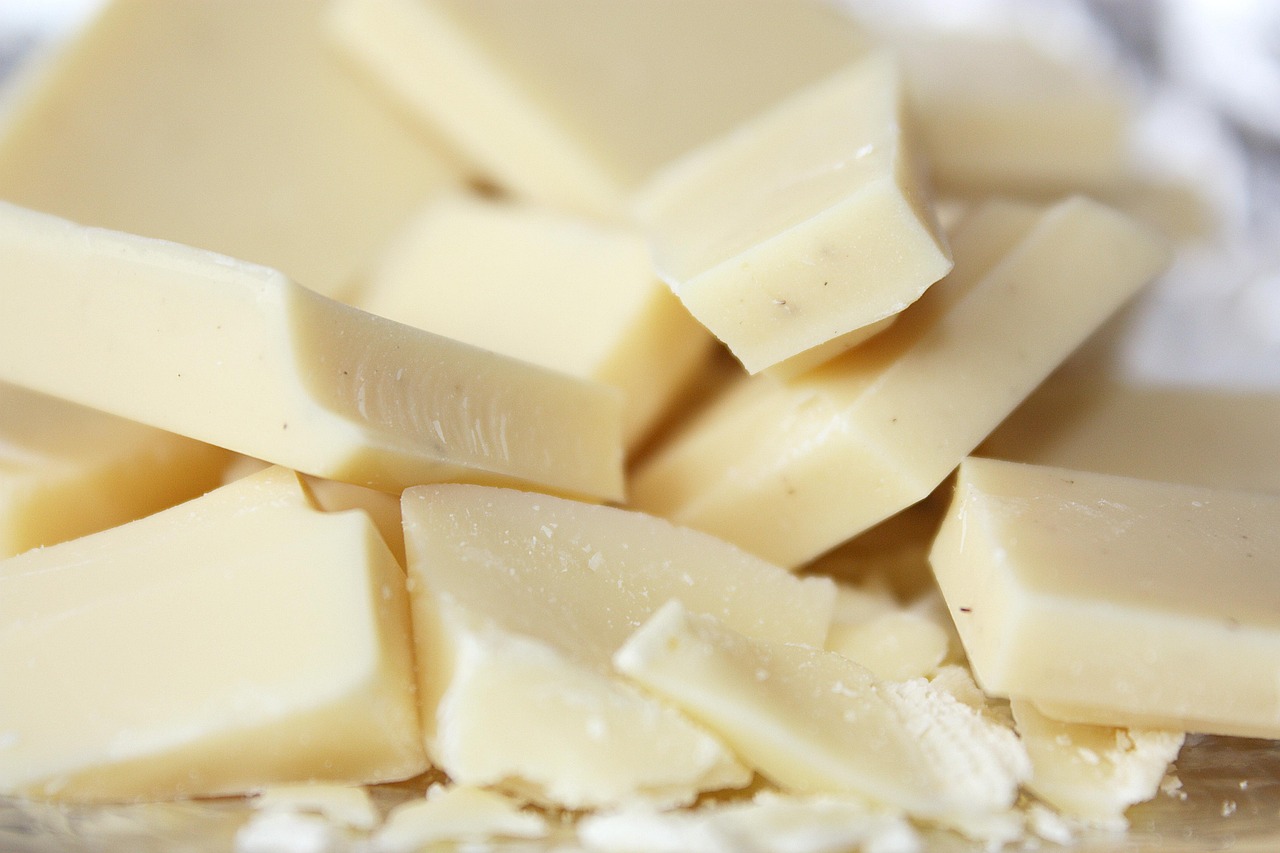
White chocolate gets dismissed a lot. “It’s not real chocolate.” “It’s just sugar.” “Real chocolate lovers don’t eat white.”
Those takes are lazy. White chocolate is a distinct product with genuine culinary value — not a consolation prize for people who can’t handle dark, and not a lesser tier of the chocolate world. It just does different things, and understanding what those things are makes you a considerably better cook and baker.
This post covers what white chocolate actually is, how it’s made, where it earns its keep in the kitchen, and why both vegan white chocolate and white hot chocolate deserve more serious attention than they typically get.
What White Chocolate Actually Is
The “it’s not real chocolate” argument is technically grounded: white chocolate contains no cocoa solids. Milk and dark chocolate both do — cocoa solids are what give chocolate its brown color, its bitterness, and most of its complexity.
White chocolate is made from cocoa butter, sugar, and milk solids. Cocoa butter comes from the cacao bean, which is the connection to the rest of the chocolate family. But without the solids, you get something that tastes fundamentally different: mild, buttery, vanilla-forward, with none of the bitter edge.
Here’s the thing most buyers miss: cocoa butter is what makes white chocolate worth buying. Real white chocolate leads with cocoa butter on the ingredient list. Cheaper versions swap it for palm oil or other vegetable fats — same pale color, completely different behavior. Vegetable-fat white chocolate doesn’t snap cleanly, doesn’t melt smoothly, and tastes flat by comparison.
Checking that ingredient list takes five seconds. It’s probably the single most useful habit you can build when buying white chocolate, because the price difference between real and fake isn’t always obvious from the packaging.
How White Chocolate Is Made
White chocolate production starts the same as any other chocolate. Cacao beans are fermented, dried, roasted, and cracked open. The nibs get ground into chocolate liquor — a thick paste of cocoa solids and cocoa butter combined.
At that point, the paths split. For white chocolate, the cocoa solids are pressed out and set aside. The cocoa butter moves forward, gets blended with sugar, milk solids, and vanilla, then goes through refining and conching.
Conching — extended mechanical mixing, sometimes for 12 to 72 hours depending on the producer — is where texture smooths out and flavor develops. It’s also where the quality gap between artisan and mass-produced white chocolate becomes most obvious. A longer, more careful conch produces a noticeably creamier result.
After conching, the chocolate is tempered — a controlled heating and cooling process that aligns the cocoa butter crystals and produces a glossy surface with a clean snap. Skip tempering and white chocolate blooms within days: dull, streaky, and soft. Most commercial white chocolate is pre-tempered, so you’re seeing the results of that process when you open the wrapper.
Tempering is the step home chocolate-makers most often skip, and it’s the main reason homemade white chocolate confections often look rough compared to store-bought. It’s learnable, but it takes practice and a thermometer.
A Bake Sale That Changed Someone’s Mind About White Chocolate
A home baker — the kind who’d always defaulted to dark chocolate and quietly rolled her eyes at white — agreed to make cookies for a school bake sale. She’d run out of dark chips and only had white chocolate chips in the cupboard.
She made her usual oat cookie base, folded in the white chocolate chips along with some dried cranberries, and baked them without much expectation.
They sold out first. Not because white chocolate is inherently better, but because the combination worked: the mild sweetness of the white chocolate chips against the tartness of cranberry created a contrast that the dark chocolate version — richer, more one-note — didn’t have.
That’s the practical case for white chocolate. It isn’t competing with dark on the same terms. It’s doing something else entirely — and in the right pairing, it wins.
White Chocolate Chips: What They’re For and Where They Fail
White chocolate chips are engineered to hold their shape in the oven. That’s not an accident — chips contain stabilizers that prevent them from fully melting at baking temperatures. It’s what makes them useful in cookies, muffins, and quick breads, where you want distinct pockets of white chocolate rather than a melted-in swirl.
Where to use white chocolate chips:
- Cookies: The classic pairing is macadamia nut, but cranberry, pistachio, or dried apricot all work well. The chips’ sweetness needs something alongside it with either crunch, salt, or tartness.
- Muffins and scones: Fold in like any mix-in. They distribute evenly and create soft, creamy bursts without making the batter wet.
- No-bake recipes: Melt partially as a binder for energy balls or bar bases, or leave whole for texture.
- Drizzles: Melt over low heat with a small splash of neutral oil to thin the consistency. Drizzle over brownies, biscotti, or popcorn for visual contrast and a flavor counterpoint.
Where chips fall short: any recipe that needs a genuinely smooth melt. The stabilizers that keep chips intact in the oven create a slightly grainy or seized texture when you try to use them in ganache, mousse, or sauces. For those applications, use a good-quality white chocolate bar instead — it melts cleanly and produces a silky result.
This is the one distinction most baking guides gloss over, and it’s why people sometimes think white chocolate ganache is difficult to make. It’s not difficult — you just need bar chocolate, not chips.
Vegan White Chocolate and White Hot Chocolate
Both of these have improved significantly, and both get undersold.
Vegan white chocolate
Traditional white chocolate is dairy-heavy by definition — the milk solids are central to its flavor. Vegan versions replace them with oat, rice, or coconut milk alternatives. The texture is slightly different: sometimes softer, occasionally less snappy, depending on which milk alternative and which cocoa butter ratio the maker used.
The better vegan white chocolate brands — the ones using actual cocoa butter rather than vegetable fat substitutes — have closed the gap considerably. For baking purposes, a good vegan white chocolate performs nearly identically to dairy versions in most recipes. The flavor profile shifts slightly toward coconut or oat depending on the base, which is worth knowing before you use it in something delicate.
If you regularly bake for mixed dietary groups, keeping vegan white chocolate alongside regular is a practical habit, not just a considerate one. It lets you adapt recipes without reformulating them entirely.
White hot chocolate
Not the powder packet. The real thing: good white chocolate — or white chocolate chips if that’s what you have — melted into warm whole milk, finished with a pinch of salt and whatever spice you want to lean into.
The salt matters. White hot chocolate made without it tastes flat and one-dimensionally sweet. A small pinch tightens the flavor and makes the vanilla and dairy notes in the cocoa butter more distinct. Cardamom works particularly well as a spice addition — a quarter teaspoon per cup. Orange zest is a close second.
Made this way, white hot chocolate is a legitimate cold-weather drink, not a novelty. It’s richer than a standard hot chocolate, less bitter, and more forgiving for people who find dark cocoa too intense. My honest view: it’s better suited to an afternoon drink than an evening one, because the sweetness is more pleasant before a meal than after.
How to Stock White Chocolate Sensibly
You don’t need a lot. You need the right things:
- A good white chocolate bar with cocoa butter listed first — for melting, ganache, and recipes where the chocolate is a featured flavor.
- White chocolate chips for baking — cookies, muffins, anything going into the oven where you want shape retention.
- Vegan white chocolate if you regularly cook for dairy-free eaters. Buy the cocoa butter-based version, not the vegetable fat version.
That’s a complete setup. None of it goes stale quickly. All three get used regularly once you stop treating white chocolate as an occasional novelty and start treating it as a standard pantry option.
The people who dismiss white chocolate have usually only had bad white chocolate — the waxy, overly sweet kind made with vegetable fat and minimal care. Try a well-made bar, make a proper white hot chocolate, bake a batch of cranberry white chocolate chip cookies, and then decide. The argument looks different from that side of it.