
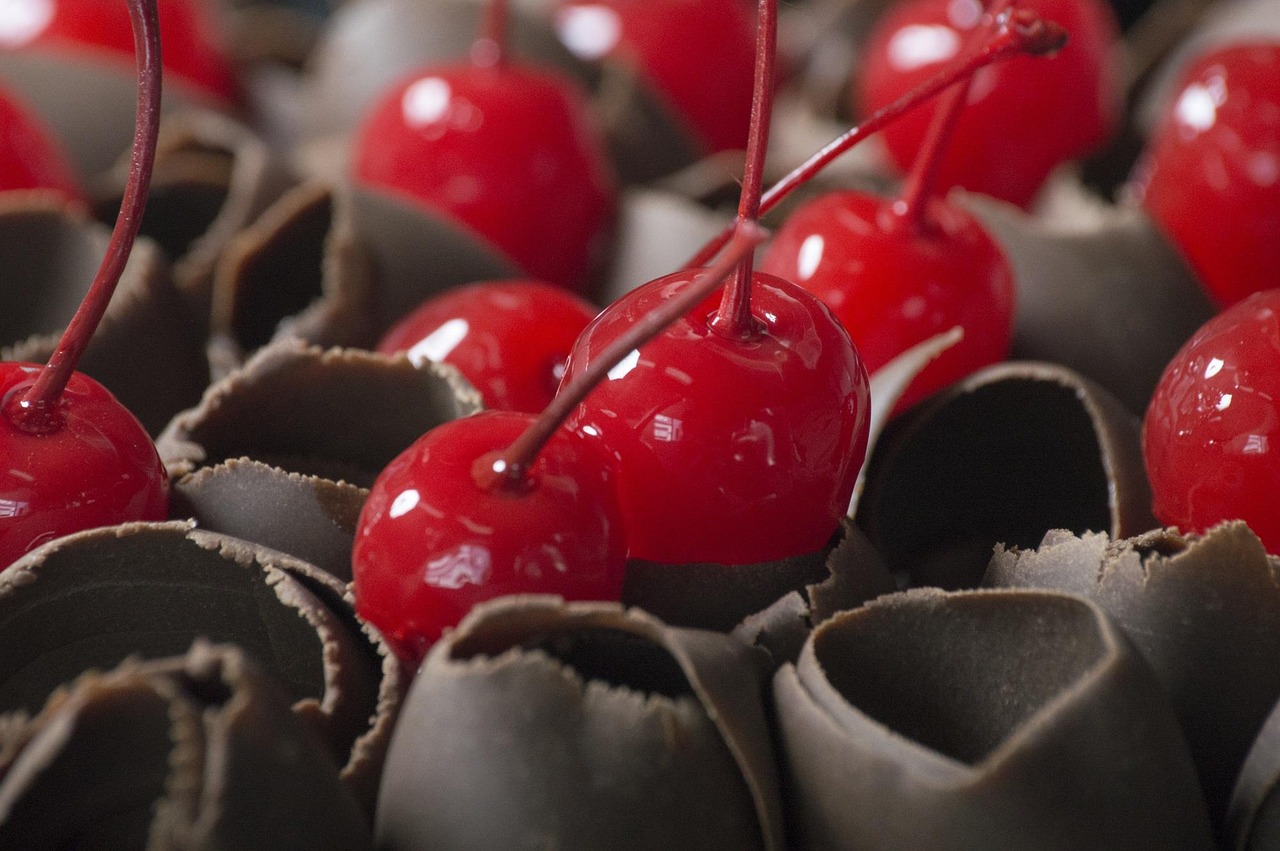
Chocolate covered cherries have a reputation problem, and it came from a red box.
Most people’s first experience with them was a mass-produced holiday version — waxy coating, synthetic cherry center, the kind of candy you eat because it’s there rather than because you wanted it. That experience stuck, and it unfairly defined the whole category.
Homemade chocolate cherries are a different product entirely. Fresh cherries dipped in good dark chocolate. Properly made cordial cherries with a genuine liquid center that develops over a week of resting. Neither one resembles what comes out of a foil-lined box.
This post covers both styles — what makes each work, how to make them, and why the choice of chocolate matters more here than in almost anything else you’ll make.
Why Chocolate and Cherries Belong Together
Most fruit and chocolate pairings work because of contrast: the fruit is tart or acidic, the chocolate is sweet and rich, and the two offset each other. Cherries do this particularly well because their acidity is high enough to cut through dark chocolate without either flavor disappearing.
The chemistry is worth understanding briefly. Cherries contain malic and citric acid — the same compounds that make tart fruit taste bright rather than flat. When those acids hit your palate alongside the bitterness of dark chocolate, neither element dominates. They register in sequence, which is what creates complexity rather than just sweetness.
Milk chocolate reduces this contrast significantly. The lower cocoa content and higher sugar means the cherry’s tartness gets absorbed rather than highlighted. That produces a pleasant candy, but a less interesting one. White chocolate removes the contrast almost entirely — it works, but only with very tart cherries where the fruit is doing all the flavor work.
Dark chocolate covered cherries are the version worth making when you want to impress someone. The contrast is sharper, the flavor holds up on a quality candy tray, and the bitterness of good dark chocolate makes the cherry taste more like itself rather than just sweet.
Fresh-Dipped vs. Cordial Cherries: Two Different Products
Fresh-dipped chocolate cherries
The simpler version. Fresh cherries — with stems, thoroughly dried — dipped in melted dark chocolate and set on parchment. Best eaten the same day, or the next. After that, the cherry releases moisture internally, which works its way into the coating and softens it from the inside out.
The stem is not decorative. It’s functional. Holding the cherry by the stem during dipping gives you control, and presenting it stem-up on a plate signals to the person eating it exactly how to pick it up. These small structural details are what separate a chocolate cherry that looks considered from one that just looks dipped.
Drying is the step most people rush and shouldn’t. Any surface moisture causes the chocolate to seize or peel away from the fruit as it sets. Rinse, pat thoroughly with paper towels, then leave them on a dry surface for ten full minutes before dipping.
Cordial cherries
A more involved project, and a genuinely different product. Cordial cherries are made with maraschino cherries wrapped in fondant before being dipped in chocolate. The fondant inside contains an enzyme — invertase — that slowly breaks down the sugar structure over several days, converting the solid fondant into liquid. This is what creates the syrupy center the style is known for.
The timeline is the detail most home recipes understate: cordial cherries need at least five to seven days of resting after dipping before the center liquefies. Cut one open on day two and you’ll find mostly solid fondant. Wait the full week and the transformation is complete. Patience is the only real skill required.
Maraschino cherries are used rather than fresh because they’re firm enough to survive the fondant wrapping and dipping process without falling apart, and their sweetness is calibrated to balance the richness of the chocolate shell. Fresh cherries are too fragile and too juicy for this process.
My recommendation: make fresh-dipped first to get comfortable with the chocolate handling, then attempt cordial cherries as a dedicated project with a specific occasion in mind. The week-long wait makes them something you plan for.
The Dinner Party Discovery
A home baker had written off chocolate cherries entirely based on the boxed version. She’d had them enough times to form a firm opinion: artificial cherry, waxy coating, not worth the calories.
At a dinner party, a friend brought a small box of homemade cordial cherries. They’d been made with a quality dark chocolate bar — not candy melts, not chips, just a good supermarket dark chocolate broken into pieces and melted slowly — and they’d rested for a full week before being packed.
The difference was immediate. The chocolate had snap. The center was genuinely liquid. The cherry tasted like a cherry, not like cherry flavoring. She ate three and asked for the recipe before leaving.
She made her first batch the following weekend. Into a holiday tin they went, alongside peanut butter balls. The cordial cherries were what people mentioned afterward — the candy they hadn’t expected to like.
The gap between a good homemade cordial cherry and the boxed version isn’t a matter of technique. It’s a matter of ingredient quality and waiting the right amount of time. Both are within reach of anyone willing to plan ahead.
How to Make Fresh-Dipped Dark Chocolate Covered Cherries
This is the version to start with. Twenty minutes of active work, same-day results, and it teaches you everything you need to know about chocolate handling before taking on the cordial version.
- Dry the cherries completely: Rinse, pat dry with paper towels, then let them sit on a dry surface for ten minutes. This is the step most people shorten and the most common reason chocolate peels off or won’t adhere. Moisture and melted chocolate don’t cooperate.
- Melt the chocolate: A quality dark chocolate bar produces better results than chips here — the higher cocoa butter content gives a thinner, more fluid melt that coats more cleanly. Microwave in 20-second intervals, stirring between each. Stop while small pieces are still visible and stir until smooth.
- Dip by the stem: Submerge each cherry fully, lift it out, and hold it over the bowl for a few seconds to let the excess fall before placing it on parchment. A slow drip produces a cleaner base than rushing. If the chocolate pools thickly at the bottom of each cherry, slow down between pieces.
- Set at room temperature: 20 to 30 minutes. The fridge is tempting for speed but causes condensation when the cherries come back to room temperature, which clouds the chocolate surface. Room temperature produces a cleaner finish.
For the cordial version, the additional steps — wrapping each maraschino cherry in fondant, sealing the chocolate coating completely so no gaps allow the liquid center to escape — require care and a good fondant recipe. But the waiting is the real work, not the technique.
Variations That Add Something Real
- Sea salt on dark chocolate cherries: A pinch of flaky salt while the coating is still wet. The salt amplifies the dark chocolate’s flavor and makes the cherry’s tartness more vivid. This is the version that reliably changes people’s minds about dark chocolate covered cherries — the salt does something to the bitterness that makes the whole thing more approachable without removing the contrast.
- White chocolate dip with tart cherries: Sour or Morello cherries, dipped in white chocolate rather than dark. The fruit provides all the contrast that the white chocolate doesn’t. Visually striking on a plate and a genuinely different flavor experience from the dark version.
- Drizzle finish: Once the primary coating is set, melt a contrasting chocolate and drizzle in thin lines over the top. Dark over white, white over dark. Takes under a minute for a full batch and makes the finished cherries look considerably more polished without adding complexity to the process.
- Liqueur-soaked variation: Soak maraschino cherries in Kirsch or amaretto for 24 hours before dipping. The alcohol intensifies the cherry flavor and adds a back-note to the finished candy. Critical: pat the cherries as dry as possible after soaking. The surface needs to be dry for the chocolate to bond. Any residual liquid will cause the coating to slip.
Why the Chocolate Bar You Choose Actually Matters
Most home recipes for chocolate cherries start with melting down a chocolate bar, and the quality of that bar has a direct, noticeable effect on the finished candy in a way that isn’t true for every application.
When chocolate is the coating and the flavor — when there’s nothing else competing for attention — what you taste is almost entirely determined by what you started with. A good dark chocolate bar with a short ingredient list (cocoa mass, cocoa butter, sugar, vanilla) melts more cleanly, coats more evenly, and tastes more like actual chocolate than products with multiple fats and emulsifiers.
The cocoa butter content is the key variable. Higher cocoa butter means a thinner melt that flows more readily over the cherry’s curved surface and sets with better snap and sheen. This is why a quality supermarket dark chocolate bar outperforms chocolate chips for this specific application — not because of brand or price, but because of fat composition.
A 3.5-ounce dark chocolate bar covers a full batch of 20 to 25 cherries comfortably. The cost difference between a good bar and a mediocre one is small. The difference in the finished candy is not.
Start with chocolate you’d eat on its own. If you wouldn’t eat it straight, it won’t make a good coating. That’s the simplest quality test for any chocolate cherry project — and it applies to every other dipped confection you’ll ever make.