Some desserts require skill, equipment, and a clear afternoon. Chocolate covered strawberries require about 20 minutes, two main ingredients, and knowing which three things most people get wrong.
That gap between how impressive they look and how little they actually ask of you is exactly why they appear at weddings, Valentine’s dinners, baby showers, and birthday spreads year after year. They’re one of the few things you can make at home that look like they came from a chocolate shop — if you handle them correctly.
The mistakes aren’t complicated, but they’re consistent. Wet fruit. Overheated chocolate. Setting them in the fridge too long. Each one is avoidable once you understand the why behind it.
Here’s what makes them work, how to make them properly, and which variations are genuinely worth the extra minute they take.
Why the Pairing Works
Flavor contrast is the whole mechanism. A ripe strawberry is cool, juicy, and carries a slight tartness from its natural acidity — malic acid, primarily, the same compound that makes green apples sharp. Chocolate is fat-rich, sweet, and dense. They don’t compete; they offset each other.
Dark chocolate strawberries push this contrast the furthest. Good dark chocolate — 60 to 70 percent cocoa — has genuine bitterness and complexity. Against a ripe berry, that bitterness reads as depth rather than harshness, and the combination produces something more interesting than either ingredient achieves alone. It’s the version that people actually remember.
Milk chocolate is more forgiving and more universally liked, but it sits closer to the strawberry in sweetness, so the contrast is softer. White chocolate removes the contrast almost entirely — it works best when the berries are very ripe and you want a sweeter, more dessert-forward result.
The quality of the chocolate matters more here than in almost any other recipe, because there’s nothing to hide behind. A mediocre coating on a good berry is noticeable. A good coating on a mediocre berry is equally obvious. Both ingredients have to earn their place.
Picking the Right Ingredients
Strawberries
Buy them the same day you plan to dip. Strawberries that have been sitting in the fridge for several days are releasing moisture — you can’t see it, but it’s there, and it will work its way into your chocolate coating as the berries sit after dipping. Firm, ripe berries with the hull still attached are ideal. The hull gives you a handle during dipping and keeps the berry intact.
Size consistency is worth considering if you’re making a platter. Berries that are wildly different in size set at different rates and look less deliberate when arranged. It’s a small detail that makes a visible difference.
Chocolate
Use real chocolate — bar chocolate, couverture, or quality chips — not candy melts. Candy melts are technically easier to work with because they don’t require tempering, but the trade-off is flavor. If the chocolate dipped strawberries need to actually taste good, the chocolate needs to be something you’d eat on its own.
If you’re using chips, stir in a teaspoon of neutral oil or refined coconut oil per cup before melting. Chocolate chips contain stabilizers that make them thicker when melted than bar chocolate naturally is. A small amount of oil compensates, giving you a coating that flows cleanly and sets with a better finish.
One practical note on couverture: if you can source it through a specialty supplier or a wholesale baking store, it’s worth using for any occasion where presentation really matters. The higher cocoa butter content produces a thinner, glossier coat with a cleaner snap.
How to Make Them Properly
The technique is genuinely simple. The places where people go wrong are predictable.
Dry the berries longer than feels necessary
Rinse them, pat dry with paper towels — not a cloth, which leaves lint — then let them sit on a dry surface for at least ten minutes. Not five. Ten. Chocolate doesn’t bond well to damp fruit, and even a small amount of surface moisture will cause the coating to peel or bloom as it sets. This step gets rushed more than any other.
Melt the chocolate gently
Double boiler or microwave in 20-second intervals, stirring between each round. The goal is smooth and fluid, not hot. Chocolate that overheats loses its temper — it’ll set dull, streaky, and without snap. If you’re using a microwave, stop while there are still small unmelted pieces visible and stir until smooth. Residual heat finishes the job without risk of scorching.
Dip, rotate, let the excess fall
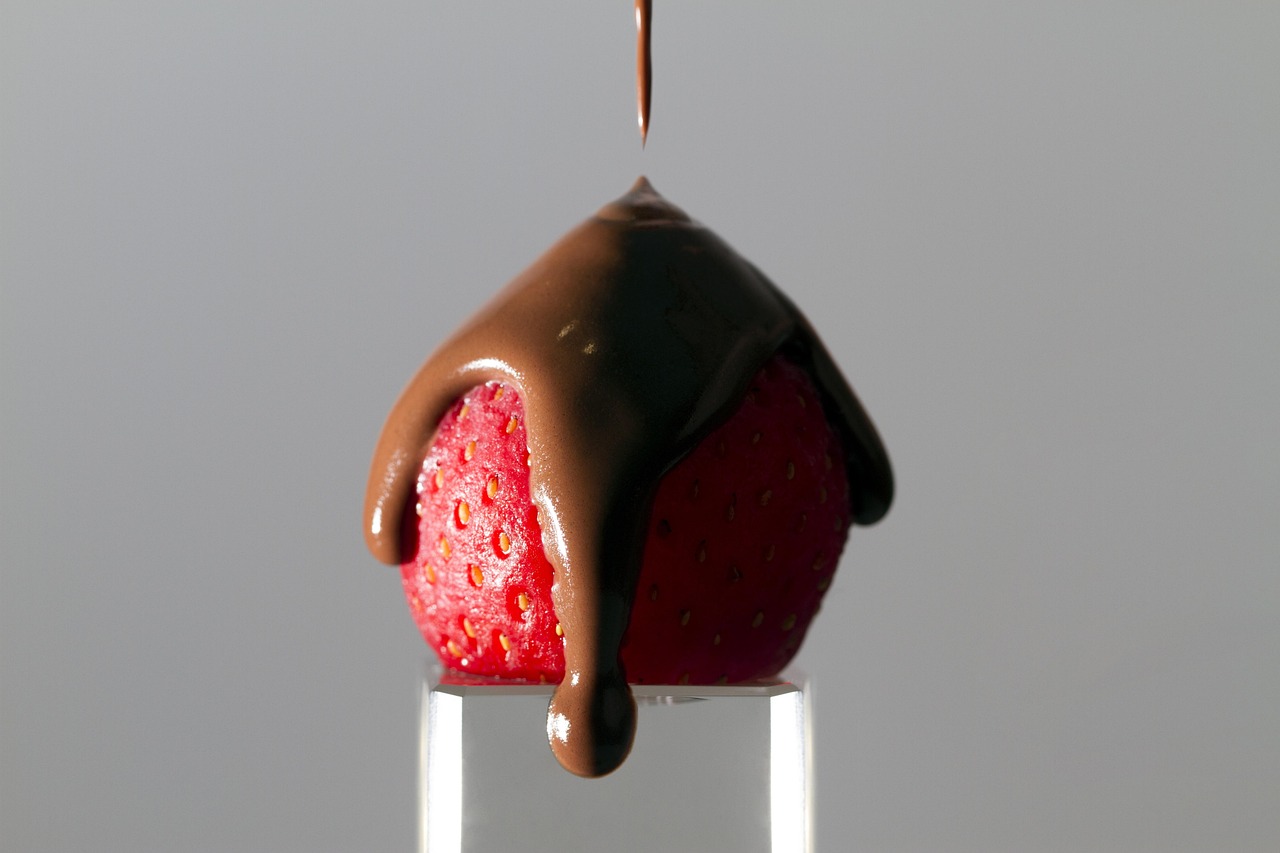
Hold the berry by the hull, dip it fully, rotate it once, then hold it above the bowl for a few seconds and let the excess drip off before placing it down. This prevents the thick pooled base — the ‘foot’ — that forms when you set a berry down immediately. A foot isn’t catastrophic, but it sets uneven and looks rushed.
Set at room temperature, on parchment
Not a plate — chocolate sticks to plates. Not the fridge, unless you genuinely need to speed things up, in which case: ten minutes maximum, then out. The fridge causes condensation when the berries come back to room temperature, which clouds and softens the chocolate surface. Room temperature setting takes 20 to 30 minutes and produces a noticeably better result.
The Valentine’s Day Batch That Went Wrong
A home cook made chocolate dipped strawberries for the first time for a Valentine’s dinner. She followed the steps reasonably carefully — washed the berries, dried them briefly, melted chocolate, dipped them — then put the finished platter straight in the fridge to set while she cooked the rest of the meal.
An hour later: grey bloom across most of the coating, condensation on several berries, and a general look of something that had been made earlier in the week rather than that afternoon.
They tasted fine. But they didn’t look like anything she’d want to photograph or put on a proper table setting.
Two fixable mistakes: the berries probably still had surface moisture when dipped — she’d dried them for maybe three minutes — and the hour in the fridge was too long. Longer drying, room temperature setting, and taking them out of the fridge before condensation develops would have produced a completely different result.
Most first batches teach you something the recipe didn’t quite prepare you for. These two lessons stick.
Variations That Actually Add Something
The plain version — one chocolate, clean finish — is always right when the fruit and chocolate are good. These variations add something rather than just creating visual business:
- Two-tone: Dip in dark chocolate and let it set fully. Then dip the bottom half in white chocolate. The visual contrast is clean and the flavor combination works — bitter on top, sweet below. Takes an extra 20 minutes for the first coat to set, but the result looks significantly more polished.
- Sea salt finish: A pinch of flaky salt on dark chocolate strawberries while the coating is still wet. The salt amplifies the chocolate flavor and cuts the sweetness of the berry. This specific combination consistently converts people who say they don’t enjoy dark chocolate — the salt changes the perception of the bitterness entirely.
- Crushed nuts or toasted coconut: Roll the freshly dipped berry in finely crushed pistachios, toasted coconut, or hazelnuts immediately after dipping. Adds texture, improves visual variety on a platter, and takes about 30 seconds per berry.
- Contrasting drizzle: Once the primary coating has set, drizzle a different chocolate over the top — white over dark, dark over white. Thin the drizzle chocolate with a small amount of oil first so it flows in clean lines rather than thick blobs.
Pairing With Chocolate Covered Pretzels
Chocolate covered strawberries work best as part of a wider spread rather than standing alone, and chocolate covered pretzels are the natural companion.
The logic is contrast again — the same principle that makes strawberries and chocolate work applies at the spread level. Strawberries bring freshness, lightness, and fruit acidity. Chocolate covered pretzels bring salt, crunch, and something more substantial to eat. The two cover different cravings without competing.
On a shared platter, set them on opposite ends and let guests graze toward the middle. Most people take both. It’s one of those pairings that seems obvious in retrospect but doesn’t get used nearly as much as it should.
When to Make Them and How Far Ahead
Chocolate covered strawberries are best the same day they’re made. The berry releases moisture internally over time, and by day two the coating starts to soften and separate — not dramatically, but noticeably.
If you need to prepare ahead, dip them no more than four hours before serving. Hold at cool room temperature — not the fridge — and serve before any condensation has formed on the surface.
For events, four hours of lead time is genuinely comfortable. You can make them mid-afternoon for an evening gathering, leave them on the counter, and they’ll look and taste as fresh as when you made them.
The effort-to-result ratio here is hard to beat in home dessert-making. Dry the berries properly, don’t rush the chocolate, skip the fridge unless necessary, and the rest is straightforward. Twenty minutes of focused attention produces something that looks like it required considerably more.